
The Power of Music: How It Shapes Our Memories, Identities, and Connections with Others

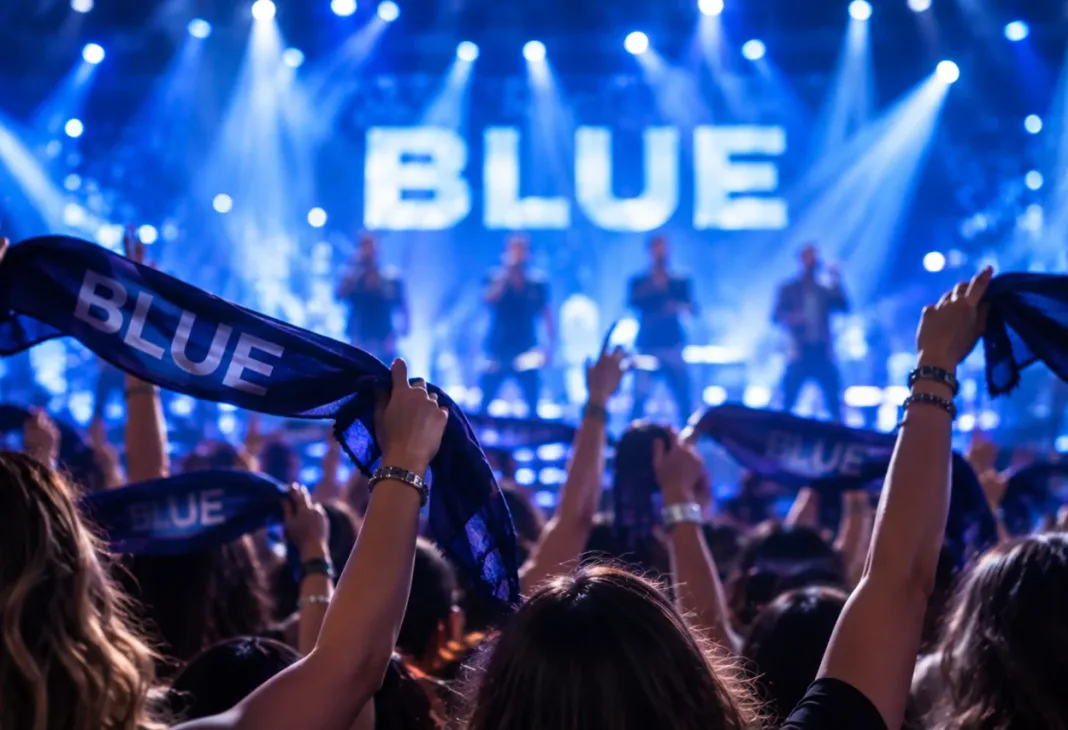
Imagine a concert venue… Hundreds of people become excited as the opening notes of the same song begin to play. Some start dancing, others sing along at the top of their lungs, while a few close their eyes and lose themselves in the music. Yet what makes the scene truly remarkable is not just the music on stage, but the shared joy reflected on people's faces.
I witnessed a scene just like this at one of the concerts held as part of Blue's 25th anniversary tour. Years after listening to the band with great admiration during my middle and high school years, I realized that I could still sing their songs by heart. Who could have imagined that the young girl who once listened to Blue in her bedroom would one day be singing those very same songs alongside thousands of people?
There were many women in their thirties at the concert, just like me. As the songs began, they danced, jumped, sang along at the top of their voices, and seemed to have momentarily escaped the demands of everyday life. After the concert, I came across social media posts such as, "The little girl inside me is so happy" and "My 12-year-old self is over the moon." Apparently, I wasn't the only one who had reconnected with a younger version of herself that evening.
But how can a band that accompanied us during a particular period of our lives evoke such powerful emotions years later? Can the opening notes of a song do more than bring back a melody? Can they also help us reconnect with who we once were?
Some Songs Turn Back Time
We all have songs that hold a special place in our lives. When a melody we listened to during our teenage years unexpectedly finds its way back to us, it can take us beyond those days. It can remind us of who we were, what we felt, and how we experienced life at the time.
The feelings I experienced while listening to Blue's popular songs are a good example. I can still vividly remember how many times I cried while listening to Breathe Easy, and how enthusiastically I danced whenever upbeat songs like One Love, All Rise, Bubblin', or Too Close began to play. The same band's music had accompanied both the sadness and the excitement and happiness of my teenage years.
This is precisely where the relationship between music and memory becomes meaningful. Our memories of personal experiences, known in psychology as autobiographical memory, can be brought back to life through music. A melody can help us recall an event from years ago, the emotions associated with it, and even how we perceived ourselves during that period.
Research suggests that music listened to during adolescence and early adulthood can carry powerful emotional associations throughout our lives. The phenomenon known as the reminiscence bump in memory research helps explain why adults tend to recall a greater number of memories from their adolescence and early adulthood when reflecting on their life stories. Music can serve as an important cue for bringing these memories back (Kudaravalli et al., 2024).
One possible explanation is that adolescence is a particularly significant period for identity development and social relationships. Friendships, first romantic feelings, admiration, dreams, and the process of discovering who we are… The music we listen to can become intertwined with all these experiences. Over time, certain songs become more than just music; they turn into part of our personal history.
Perhaps this is why, when Breathe Easy plays years later, I am not simply listening to a song. I am also remembering the age at which I first heard it, the emotions I experienced back then, and my younger self, who believed there was still so much of life waiting to be lived.
Coming Together Through the Same Song: The Social Power of Music
Imagine hundreds of strangers dancing, singing the same lyrics, and sharing similar feelings of excitement in a concert venue. Despite having different lives, experiences, and personal stories, these people become part of a shared experience for a few hours.
From a social psychology perspective, this scene is particularly meaningful. According to social identity theory, individuals define themselves not only through their personal characteristics but also through the groups to which they belong. Musical preferences, admiration for particular artists, and shared cultural experiences can all contribute to the development of this sense of belonging (Tajfel & Turner, 1979).
This was exactly what caught my attention as I watched the women at the Blue concert. People who had never met before smiled at one another as the same song began, danced together, and sang the lyrics in unison. Although they had no prior personal connection, a sense of closeness seemed to emerge through their shared musical tastes and collective memories.
To understand this experience, we can also draw on the sociological concept of collective effervescence. Introduced by Émile Durkheim, the term describes the intense excitement, energy, and sense of togetherness that people experience when they gather around a shared activity. An emotion experienced individually can feel much stronger when shared with others.
Thousands of people singing together, moving to the rhythm, and dancing during a concert is one of the moments in which this shared emotional experience becomes visible. Research suggests that live music events can be associated with social connection, a sense of community, and belonging (Rickard et al., 2025).
Perhaps the enjoyment we experience at a concert does not come solely from listening to an artist we love. It may also come from feeling alongside others, sharing a moment of collective excitement, and experiencing what it means to be part of a community.
The 12-Year-Old Girl Inside Us Is Still There
One particular expression kept coming back to me as I read the social media posts after the concert: "The 12-year-old girl inside me is so happy."
Throughout adulthood, we often take on many different roles. Work, responsibilities, relationships, expectations, and the endless demands of everyday life… Sometimes, we fail to notice how little room we leave for the things that once excited us. Yet reconnecting with experiences that brought us happiness in the past can help strengthen our relationship with ourselves.
Nostalgia is more than simply longing for the past. Remembering positive experiences from earlier in our lives can help us feel a sense of continuity in our personal stories and reconnect our present selves with who we once were. Studies exploring the relationship between nostalgic memories, social connectedness, and a sense of meaning in life also highlight the psychological functions of nostalgia (Wildschut et al., 2006; Barrett et al., 2010).
From this perspective, I do not see the Blue concert simply as an opportunity to listen to a band I love again. I also see it as an opportunity to reconnect with my younger self: the girl who knew the lyrics by heart, cried to their music, and danced with excitement.
What matters here is not returning to the past and remaining there, but embracing our past experiences as part of who we are today. Perhaps, alongside all the things that change as we grow older, it is comforting to realize that some of the things that make us happy can remain the same.
We can also think of the concept of the inner child as a metaphor in this context. The curiosity, excitement, desire to play, and enthusiasm we experienced during childhood and adolescence can continue to find a place in our adult lives. Dancing freely at a concert, singing a favorite song without hesitation, or simply surrendering ourselves to the rhythm of the music can be small yet meaningful examples of this.
The Concert Ends, but the Shared Feeling Remains
Sometimes music accompanies emotions we experience on our own; at other times, it creates an invisible bond between us and people we have never met. Listening to a song again after many years can bring our personal memories back to life, while singing that same song alongside hundreds of others can transform the experience into a moment of shared happiness.
The enthusiasm I witnessed among the women at the Blue concert made me think about something: Perhaps, from time to time, we all need to reconnect with the excitement we have forgotten amid the demands of everyday life. The beginning of a song can open a small yet meaningful door to that encounter.
As I was leaving the concert venue, I hadn't expected to lose my voice. Apart from the fact that my throat was sore from singing along, I was also delighted to realize that I still remembered the lyrics of songs I had listened to years ago. That evening, I had done more than listen to a band I loved. I had shared a moment of collective happiness with my younger self and with so many people who had come together through the very same songs.
Perhaps growing up does not mean leaving our former selves behind; perhaps it means being able to sing along to the songs they loved, as the people we are today.
Because some songs do more than remind us of our past. They also remind us of the joy we continue to carry within us, even as we change over time.
Kaynakça
- Barrett, F. S., Grimm, K. J., Robins, R. W., Wildschut, T., Sedikides, C., & Janata, P. (2010). Music-evoked nostalgia: Affect, memory, and personality. Emotion, 10(3), 390–403. https://doi.org/10.1037/a0019006
- Durkheim, É. (1915). The elementary forms of the religious life (J. W. Swain, Trans.). George Allen & Unwin. (Original work published 1912)
- Kudaravalli, R., Kathios, N., Loui, P., & Davidow, J. Y. (2024). Revisiting the musical reminiscence bump: Insights from neurocognitive and social brain development in adolescence. Frontiers in Psychology, 15, Article 1472767. https://doi.org/10.3389/fpsyg.2024.1472767
- Rickard, N. S., Lewis, K., Ballantyne, J., & Dingle, G. (2025). The unifying power of live music events: A systematic review of social outcomes for audience members. Musicae Scientiae, 29(4), 595–623. https://doi.org/10.1177/10298649251349703
- Tajfel, H., & Turner, J. C. (1979). An integrative theory of intergroup conflict. In W. G. Austin & S. Worchel (Eds.), The social psychology of intergroup relations (pp. 33–47). Brooks/Cole.
- Wildschut, T., Sedikides, C., Arndt, J., & Routledge, C. (2006). Nostalgia: Content, triggers, functions. Journal of Personality and Social Psychology, 91(5), 975–993. https://doi.org/10.1037/0022-3514.91.5.975