
The Man Who Grows Up in His Mother’s Shadow: The Enmeshed Mother–Son Relationship

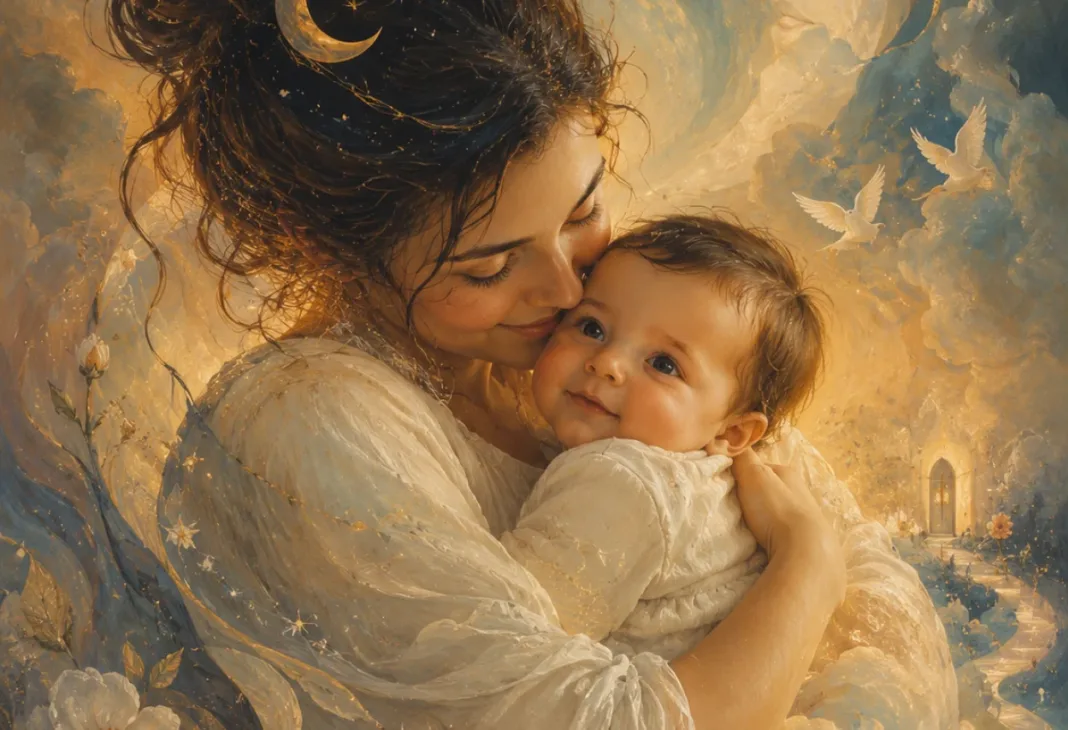
The bond between a mother and her son is one of the earliest, warmest, and most formative relationships in human development. Through this bond, the child may develop a sense of security, belonging, and the capacity for emotional regulation. Yet in some relationships, love can turn into an invisible boundary violation; the mother’s anxiety, loneliness, or emotional emptiness begins to occupy the son’s psychological space. The son then ceases to be merely a “child” and may become his mother’s confidant, surrogate emotional partner, source of comfort, or the central male figure in her life. In psychological literature, this pattern is often discussed through the concepts of enmeshment, emotional parentification, or, in more clinical terms, emotional incest.
In an enmeshed mother–son relationship, the central problem is not an excess of love, but the blurring and interweaving of boundaries. In healthy closeness, a mother loves and supports her child while also making room for his individuation. In an enmeshed relationship, however, the son’s separation may be unconsciously experienced by the mother as a threat. When he makes his own decisions, enters a romantic relationship, or becomes emotionally more distant from her, he may experience guilt, anxiety, or a sense of disloyalty. Contemporary family research suggests that warmth and closeness in mother–adult child relationships can be protective, whereas overly intrusive, controlling, or poorly bounded relationships may negatively affect the adult child’s psychological well-being.
Within this dynamic, the son may become trapped in the role of the “good son.” He postpones his own needs so that his mother will not feel upset, hurt, or alone. From the outside, he may appear self-sacrificing, devoted, and sensitive; internally, however, there may be a boy whose sense of self has weak boundaries and whose autonomy has become stained by guilt. Parentification describes the developmental risk that arises when a child assumes emotional responsibilities that are inappropriate for his age and moves from the position of being cared for into the position of caregiver. In this way, roles within the family system become reversed.
The concept of emotional incest becomes particularly important here. It does not refer to sexual contact; rather, it describes a parent’s use of the child to obtain emotional closeness, approval, loyalty, and support that would ordinarily be expected from an adult partner. The Childhood Emotional Incest Scale developed by Çimşir and Akdoğan showed that emotional incest is associated with patterns of childhood emotional neglect and emotional abuse. The issue, therefore, is not simply “being too close”; it is a disruption of the child’s developmental role.
The effects of such mother–son relationships often become especially visible in adulthood, particularly within romantic relationships. As the son grows closer to his partner, he may feel as though he is betraying his mother. The partner, meanwhile, may experience herself as a “third person” in the relationship because the mother’s emotional presence intrudes into the couple’s bond. Decisions may be shaped not by the needs of the couple but by the mother’s anticipated reaction. In such a pattern, the romantic partner can be pushed into the position of “the woman who competes with the mother.” Although the son may appear to be choosing between two women, the deeper conflict is not outside him but within him: a self caught between the wish to separate and the fear of guilt.
From a psychodynamic perspective, this structure may be associated with an incomplete separation–individuation process. The son grows physically, yet emotionally he continues to live within his mother’s psychological climate. He may struggle to identify his own desires because, for years, he has learned to hear his mother’s needs before his own. From the perspective of schema therapy, schemas involving subjugation, self-sacrifice, enmeshment, and approval-seeking may also frequently emerge within this relational pattern.
Yet reducing this picture to a simple narrative of the “controlling mother” would be incomplete. The mother often has a story of her own: loneliness, dissatisfaction within marriage, fear of abandonment, traumatic losses, feelings of worthlessness, low self-esteem, or a lack of emotional support. She may not consciously intend to harm her son; however, when her unmet needs are placed on the child’s shoulders, a bond that looks like love can gradually narrow the child’s psychological space. Contemporary studies of family functioning emphasize that healthy family structures can protect child and adolescent mental health, whereas dysfunctional family boundaries may be associated with anxiety, depression, and behavioral difficulties.
Healing begins not with severing the relationship, but with establishing boundaries. Loving one’s mother and psychologically differentiating from her are not opposing acts. The son must learn to hold the sentences “I love my mother” and “I am building my own life” within the same psychological room. In therapy, the work may focus on processing guilt, strengthening boundaries of the self, recognizing family figures who become a third presence within romantic relationships, and developing a more adult-to-adult relationship with the parent.
Because every child must one day step out of his mother’s gaze and look into his own mirror. Love becomes healing not when it keeps the child contained within the mother, but when it becomes a secure ground from which he can walk toward the world.
Kaynakça
- References
- Çimşir, E., & Akdoğan, R. (2021). Childhood Emotional Incest Scale (CEIS): Development, validation, and association with childhood emotional abuse and neglect. Journal of Interpersonal Violence.
- Soltanian, M., et al. (2025). Parentification and the family system in adolescents. Current Psychology / PMC.
- Thomeer, M. B., et al. (2025). Dynamics of adult child-mother relationships in emerging adulthood. PMC.
- Ye, Z. Y., et al. (2025). Family functioning and anxiety in children: A narrative review. Translational Pediatrics.
- Suitor, J. J., et al. (2025). Maternal differential treatment and adult children’s psychological well-being. Journal of Marriage and Family.